Join our fixed departure trips.  4.9 of 528 reviews
 4.8 of 214 reviews
4.9 of 528 reviews 4.8 of 214 reviews 
Meta Description:
A complete Mt. Kailash Tour guide covering spiritual significance, routes, itinerary, permits, best time, preparation tips, packing list, FAQs, and expert planning insights for pilgrims and trekkers.
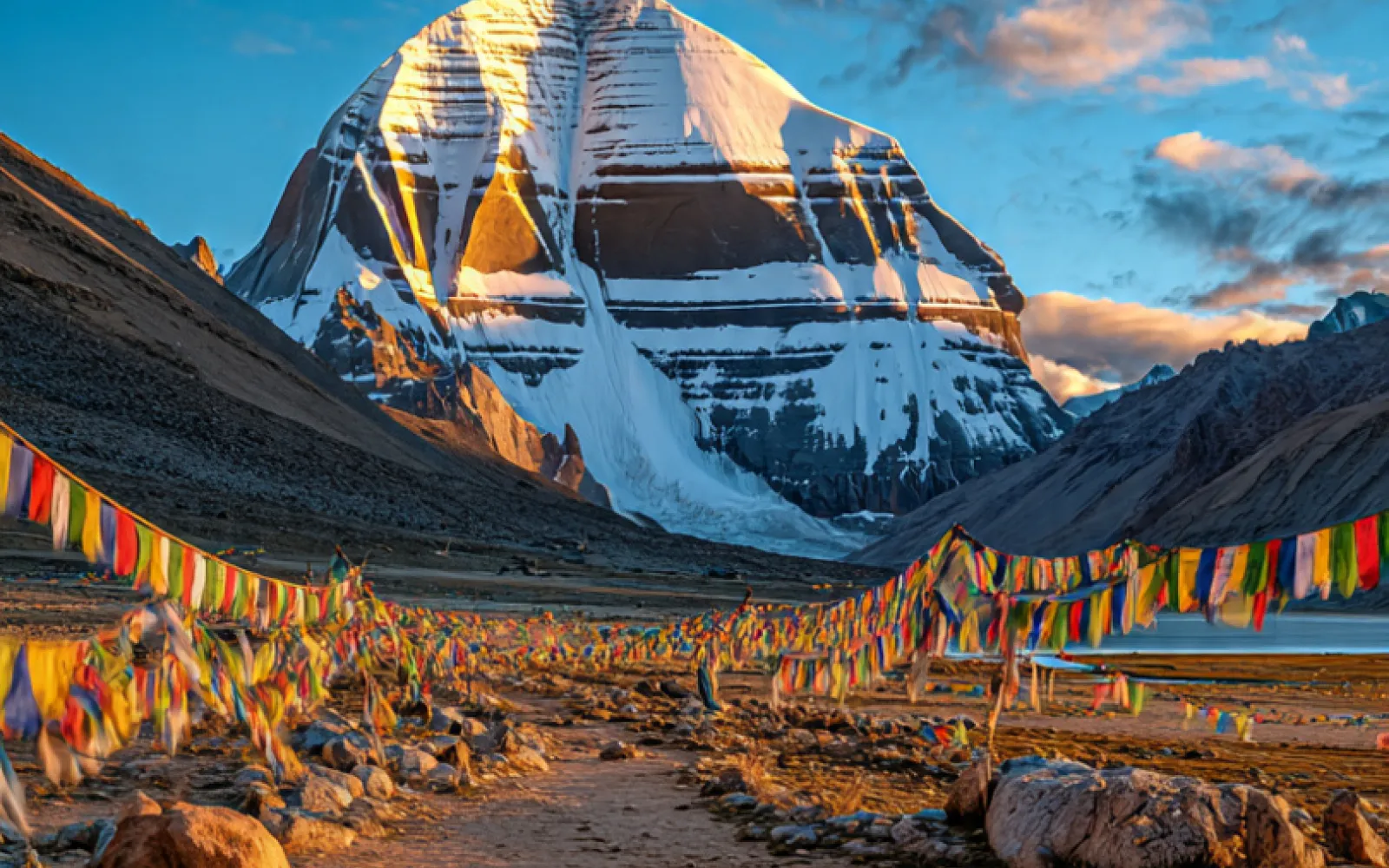
For thousands of years, Mount Kailash has been more than a mountain. It is a symbol of divine presence, a center of spiritual energy, and a dream destination for pilgrims from India, Nepal, and around the world. Rising at 6,638 meters in the remote Tibetan Plateau, Mt. Kailash is revered across four major religions — Hinduism, Buddhism, Jainism, and Bon.
For many, the Mt. Kailash Tour is not just a travel experience — it is a calling. People travel here seeking blessings, purification, emotional healing, or a deeper spiritual awakening.
If you’re planning your first Mt. Kailash journey, this guide will give you a clear, beginner-friendly, expert advisory overview, shaped by deep research and real traveler experiences — plus important insights to help you prepare confidently.
One of the reasons the Mt. Kailash Tour is so unique is its universal spiritual importance.
Hindus believe Mount Kailash is the abode of Lord Shiva and Mata Parvati. Completing the Kailash Parikrama (Kora) is said to erase the sins of a lifetime and open the path to spiritual liberation.
Buddhists see it as Mount Meru, the center of the universe. Many Tibetan Buddhists perform the Kora as an act of devotion, humility, and merit.
For Jains, Mt. Kailash (Ashtapada) is where Rishabhdev, the first Tirthankara, attained liberation.
For the Bon community, Kailash is the seat of Shenrab Miwo, their most sacred deity.
The crystal-clear waters of Lake Mansarovar, located at 4,590m, are believed to have been created by Lord Brahma. Pilgrims perform holy dips, meditation, and circumambulation for spiritual cleansing.
This combination of faith, mythology, and serene natural beauty makes the Mt. Kailash Tour a deeply transformative experience.
If this is your first time planning a Mt. Kailash trip, here are the basics:
The tour is open to:
Because of its altitude, travelers must be prepared for:
But with the right preparation and itinerary planning, even senior pilgrims complete the journey successfully.
There are several routes to reach Mt. Kailash. For most travelers in 2026, the safest and most popular routes are via Nepal.
Most preferred route for Indian pilgrims and international travelers.
✔ Smooth altitude acclimatization
✔ Kathmandu starting point is convenient
✔ Scenic, safe, and manageable for beginners
✔ Helicopter options available for parts of the journey
Starts from Kathmandu → Nepalgunj → Simikot → Hilsa → Tibet border.
Ideal for:
These routes via Uttarakhand (Lipulekh Pass) or Sikkim (Nathu La) are long treks and have limited seats. Good for adventure trekkers, but not the easiest for beginners.
A typical itinerary for overseas travelers looks like this:
Rest, briefing, preparation, shopping.
Visit Pashupatinath for blessings before the journey.
Immigration + first acclimatization experience.
Slow ascent, avoid exertion, hydrate well.
First darshan of Mt. Kailash (weather permitting). Holy Lake Mansarovar rituals.
Preparation for Kora trek.
Walk gradually; stunning view of Mt. Kailash North Face.
Complete the parikrama.
Note: Itinerary may vary depending on weather, permits, and travel conditions.
For international spiritual travelers and Indian pilgrims, the following documents are essential:
Must be arranged through an authorized operator.
Passport + photos needed. Usually takes 3–4 working days.
Must include high-altitude emergency coverage.
Start permit processing early — Tibet entry rules can change seasonally.
Travel is open only from May to September.
Clear skies, moderate temperature, ideal for photography.
Warmer but occasional rain.
Best clarity, stable weather.
Winter (Oct–April):
Travel is completely closed due to extreme snow.
Without quoting exact numbers, here are the main factors that affect cost:
Expert Tip:
Booking early helps avoid peak-season price fluctuations.
The Kora, or Parikrama, is a 52 km circumambulation of Mt. Kailash done over 3 days.
Yes, but manageable with:
Thousands of senior pilgrims complete it every year.
Based on extensive research, consultation, and real traveler feedback:
Spend at least 3 days adjusting to altitude.
Walk slowly and hydrate often.
It helps with constant temperature changes.
Tibet regulations can change.
Mansarovar can be windy and wet.
A well-planned itinerary reduces risks.
No. Climbing is strictly prohibited for spiritual reasons.
Yes. Many senior pilgrims complete the journey with proper guidance and acclimatization.
May, June, July, and September are the most popular.
Moderate to challenging — but doable for beginners with preparation.
Not mandatory, but recommended. Voter ID is required.
Yes — though simple. Dal, rice, noodles, soups, and basic Indian dishes are common.
Yes (weather permitting). Always follow safety instructions.
Planning a Mt. Kailash Tour can feel overwhelming — permits, altitude, routes, and itineraries can be confusing for first-timers.
If you want personalized pilgrimage travel guidance,
custom itinerary planning, or expert travel consultation,
you can reach out anytime:
📩 Email: info@idealnepaltours.com
📱 WhatsApp: +977 9841299765
I’ll help you plan your journey with clarity, confidence, and spiritual focus.
Our travel experts are ready to assist you with any questions.
Send us a message.Have a question before you book? Send your enquiry below and our travel experts will get back with the required information.